
This post contains affiliate links.
Let me start with a confession: I read an article last week about the five essential shots every amateur golfer needs to master, and I realized I can't reliably hit a single one of them.
Not one.
I'm a 21 handicap. I've been playing for years. I have Arccos sensors on every club, a GOLFTEC membership, and more YouTube instruction saved to my watch-later playlist than I'll ever get through. And yet, when I need to hit a controlled fade off the tee? Disaster. A punch shot out of trouble? I somehow find more trouble.
But here's the thing: knowing what you should be able to do is the first step toward actually doing it. So I'm breaking down each of these five shots, confessing how badly I execute them, and sharing what I've learned—mostly from failing repeatedly at River Creek Club.
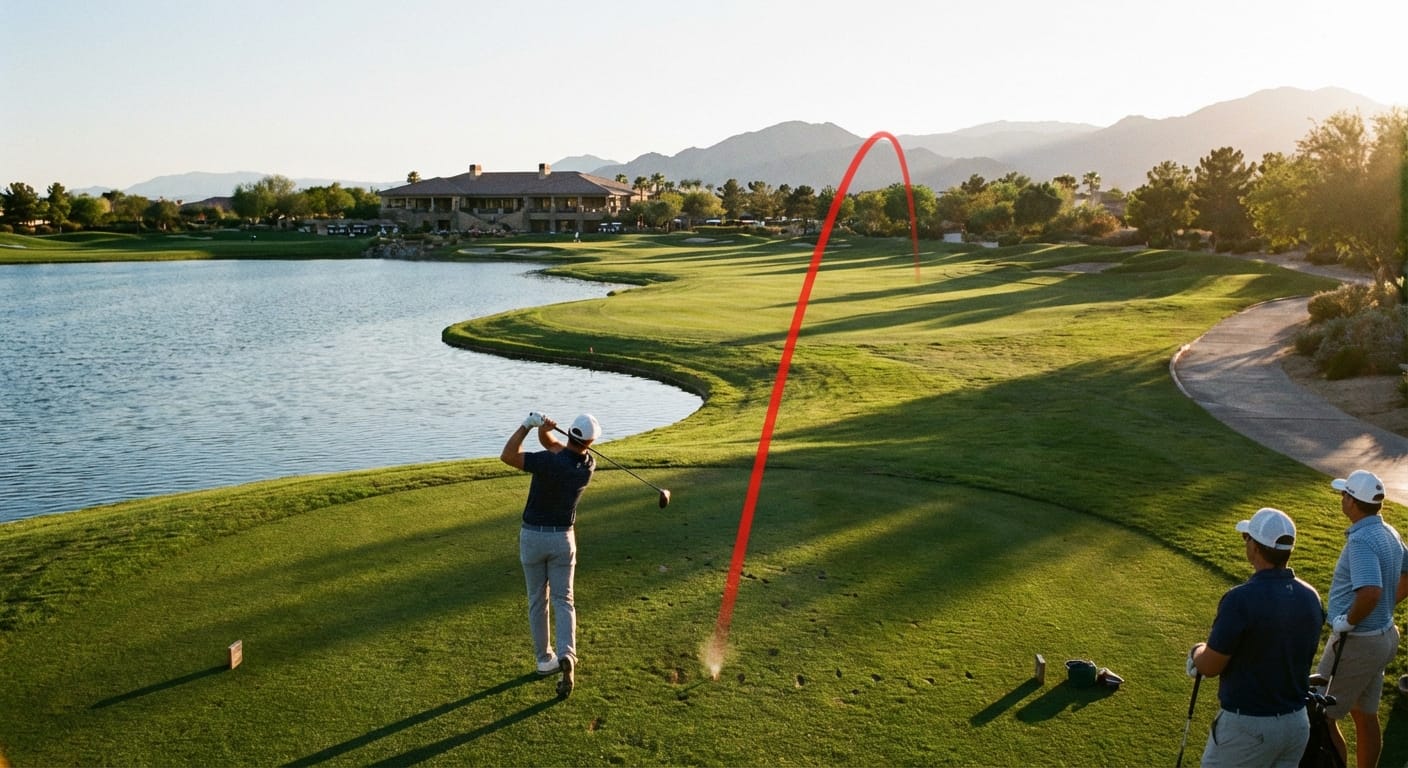
Shot #1: The Controlled Fade
What it is: A shot that starts left of target (for righties) and gently curves back to the right. It's supposed to be your "safe" tee shot when you absolutely cannot miss left.
Why you need it: Because sometimes there's water left. Or out of bounds. Or a house with very expensive windows.
My confession: I don't hit fades. I hit slices that I pretend were fades. There's a difference. A fade moves 5-10 yards right. My "fade" moves 40 yards right and lands in the adjacent fairway.
What I've learned: My GOLFTEC coach showed me that a real fade comes from an open clubface at impact with a slightly out-to-iath—not from coming over the top like I'm chopping wood. The key is opening your stance slightly while keeping the clubface aimed at your target. Tee it down a touch to keep the ball flight lower.
My results: Honestly? Work in progress. But when I focus on "width" in my backswing—feeling the club move away from my body—the fade is more controlled. My Arccos data shows my fairway percentage goes up about 8% when I commit to this shot instead of trying to bomb it.
The caveat: If you already slice the ball, this might not be your priority. Fix the slice first. A fade is a choice; a slice is a cry for help.
Shot #2: The Hybrid from the Fairway
What it is: A long approach shot with a hybrid club, ideally landing on or near the green from 180+ yards out.
Why you need it: Because most high handicappers can't hit long irons. The hybrid exists specifically for us. It's more forgiving than a 4-iron and easier to get airborne than a fairway wood.
My confession: For the longest time, I treated my hybrid like a fairway wood—ball forward in my stance, trying to sweep it off the turf. The result was thin shots that never got airborne and fat shots that went 90 yards.
What I've learned: Hybrids need a slightly descending blow. Not as steep as an iron, but you should expect to take a small divot. Position the ball about one-and-a-half balls inside your left heel. Trust the loft—the club will get the ball up. You don't need to help it.
My results: This was actually a breakthrough for me. Once I stopped trying to lift the ball and just hit down through it, my hybrid became my most reliable long club. My Arccos strokes gained from 175-200 yards improved by almost half a stroke once I committed to this technique.
The caveat: If you're playing from a tight lie or hardpan, the hybrid can be trickier. Consider a lower-lofted hybrid or even a long iron if you've got a decent lie.
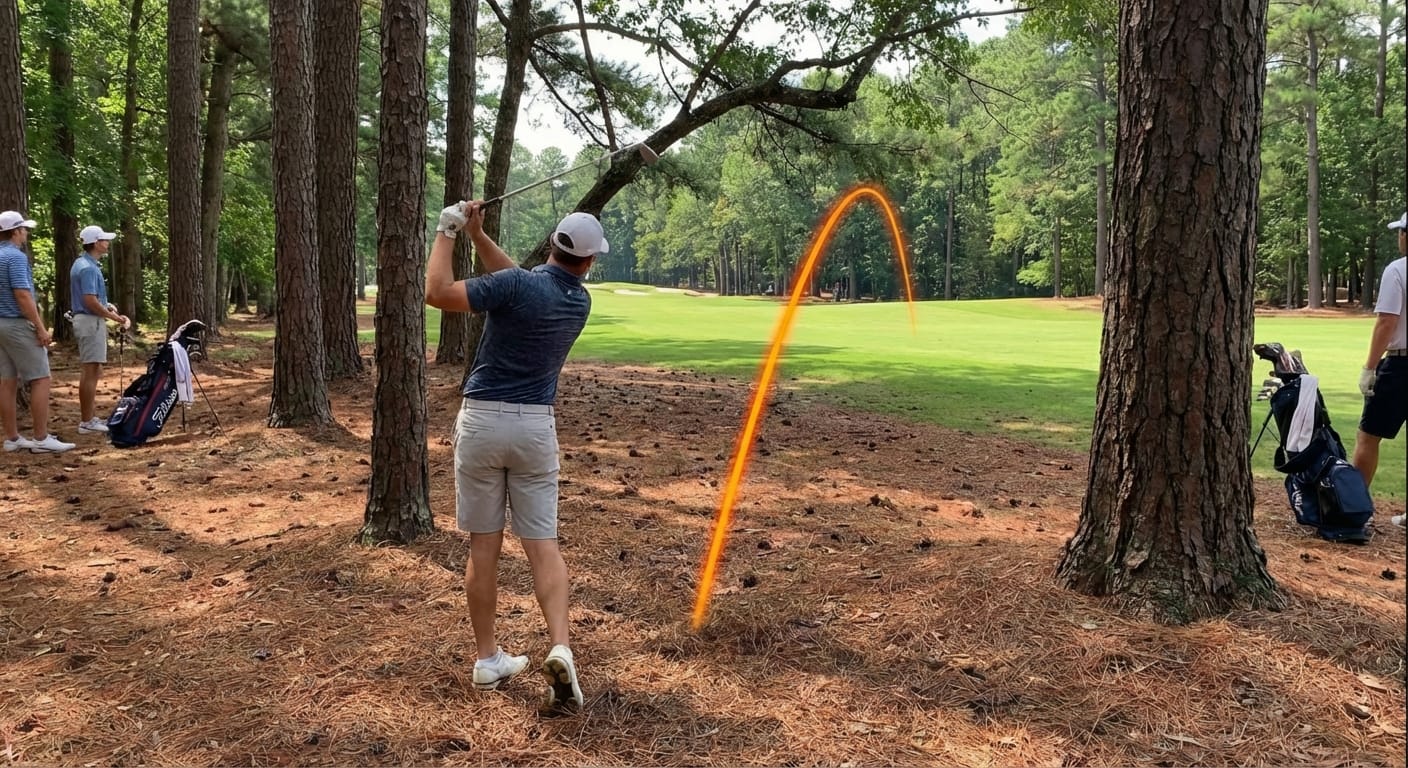
Shot #3: The Punch Shot
What it is: A low, controlled shot designed to escape trouble—trees, wind, or any situation where you need to keep the ball under obstacles and get back into play.
Why you need it: Because you will hit it into the trees. I don't care how good you get. At some point, you'll be standing behind a pine tree wondering how you got there, and you'll need to manufacture a shot that travels 120 yards at knee height.
My confession: My instinct when I'm in trouble is to try something heroic. Curve it around the tree. Hit a high fade over the branches. Go for the green through a six-inch gap. This instinct is wrong. It always ends badly.
What I've learned: Choke down 1-2 inches on a 5 or 6-iron. Ball in the middle of your stance (or even slightly back). Three-quarter backswing. The key is the follow-through—keep it short and low. The shorter your finish, the lower the ball flies.
My results: The punch shot has saved me more strokes than any other shot on this list. Not because I hit it well, but because I finally stopped trying to be a hero. Taking my medicine and punching back to the fairway means bogey instead of double or triple. My Arccos data shows my "recovery" percentage—getting back in play from trouble—jumped from 54% to 71% once I committed to this boring, low-risk approach.
The caveat: Don't punch it if you don't have to. I've seen golfers use this shot when they had a clear line to the green. Save it for actual trouble.
Shot #4: The Bunker Shot
What it is: A splash shot from a greenside bunker that pops the ball out softly and lands it on the green.
Why you need it: Because you will find bunkers. The average amateur misses 60% of greens in regulation, and course designers love putting sand between you and the pin.
My confession: I used to be terrified of bunkers. Absolutely terrified. I'd aim away from them even if it meant hitting into worse trouble. When I did end up in one, I'd skull it across the green or chunk it and watch the ball roll back to my feet.
What I've learned: The bunker shot is weirdly simple once you understand the concept: you're not hitting the ball. You're hitting the sand behind the ball, and the sand lifts the ball out. Open the clubface before you grip it. Dig your feet in for stability. Aim to enter the sand 1-2 inches behind the ball and accelerate through. The splash of sand does the work.
My results: I actually look forward to bunker shots now—at least greenside ones. (Fairway bunkers are still a nightmare.) My sand save percentage went from 8% to about 22%, which still isn't great, but it means I'm getting up and down roughly once every four or five bunker visits instead of almost never.
The caveat: This only works for standard greenside bunkers with decent sand. If you're in a fairway bunker 180 yards out, or if the bunker has no sand in it (looking at you, municipal courses), different rules apply.

Shot #5: The Chip Shot
What it is: A low, running shot from just off the green that gets on the putting surface quickly and rolls to the hole like a putt.
Why you need it: Because scrambling is how high handicappers save pars. You're going to miss greens. A lot of greens. The chip shot is your second chance.
My confession: I used to reach for my 60-degree wedge every time I was within 20 yards of the green. I'd try to hit these high, soft flop shots that would land like a butterfly with sore feet. Except they didn't. They either caught the ball thin and raced across the green, or they chunked into the turf and went three feet.
What I've learned: The chip is basically a putting stroke with a different club. Minimal wrist hinge. Ball back in your stance. Weight favoring your front foot. Let the loft of the club do the work. And here's the big one: you don't need a lob wedge. A 7-iron or 8-iron chip that runs along the ground is way more forgiving than a high-lofted flop.
My results: Switching to lower-lofted chips has been a game-changer. My up-and-down percentage from within 20 yards went from around 18% to 31%. Still not great, but that's the difference between a lot of bogeys and a lot of double bogeys.
The caveat: Sometimes you do need height—like when there's a bunker between you and the pin, or the green is severely sloped away from you. But 80% of the time, the bump-and-run is the smarter play.
The Honest Truth
Here's what I've realized after cataloging my failures with each of these shots: the difference between a 20 handicap and a 15 handicap isn't hitting perfect shots. It's having a reliable B-game.
I can't stripe a power fade down the fairway like the YouTube pros. But I can hit a controlled tee shot that finds grass instead of water. I can't stuff a hybrid to three feet, but I can get it on or near the green and give myself a chance. I can't spin a bunker shot back to the pin, but I can get out in one try.
That's the goal. Not perfection. Just reliability.
And if you're a high handicapper like me, these five shots are worth practicing—not because you'll master them, but because having them in your bag means fewer disasters, fewer blow-up holes, and lower scores.
Now if you'll excuse me, I have a punch shot to practice. I've got a round at River Creek on Saturday, and hole 7 has a tree that knows my name.
– Jason
Track where you're actually losing strokes with Arccos Smart Sensors – the data doesn't lie, even when you want it to.