This post contains affiliate links.
Let me start with a confession: I once hit a $5 golf ball into the woods on purpose.
Not really on purpose, obviously. But standing on the 14th tee at River Creek Club with a brand new sleeve of Pro V1s someone gave me for Christmas, I was so paralyzed by the thought of losing a premium ball that I tensed up, came over the top, and sent that little white investment straight into the forest.
Five dollars. Gone. That's a coffee drink I just launched into the Virginia wilderness.
If you're a high handicapper who's ever stood over a $5 ball wondering if you're about to make a very expensive donation to your local course's ecosystem, you're in the right place. After losing approximately 847 golf balls in my quest to break 100 (and now 90), I've learned a few things about what actually matters when choosing golf balls for 20 handicap players like us.
The High Handicap Golf Ball Dilemma
Here's the thing nobody tells you about golf balls: the advice is all backwards for high handicappers.
Every review focuses on spin rates, compression, and trajectory optimization. Meanwhile, I'm over here trying to figure out if I can justify spending $50 on a dozen balls when I lost four on the front nine last week.
The real questions we need answered are:
- Will I actually notice the performance difference?
- Can I find this thing in the rough?
- What's my actual cost-per-round when I factor in the balls I lose?
- Does it help with the basics, like hitting the ball square?
So I did what any data-obsessed 21-handicapper would do: I played different balls for months and tracked everything in Arccos. Here's what I learned.
Golf Balls for 20 Handicap Players: The Real Comparison
| Ball | Cost per Ball | Balls Lost/Round | Cost/Round | Best For |
|---|---|---|---|---|
| TP5 Stripe | $4.50 | 4.5 | ~$20 | Alignment help |
| Pro V1 | $5.00 | 5.2 | ~$26 | Premium feel |
| Tour Response Stripe | $3.25 | 6.0 | ~$19 | Short rough, summer only |
| Titleist Velocity | $2.50 | 5.0 | ~$12 | Budget value |
TaylorMade TP5 Stripe: The Game Changer I Didn't Expect
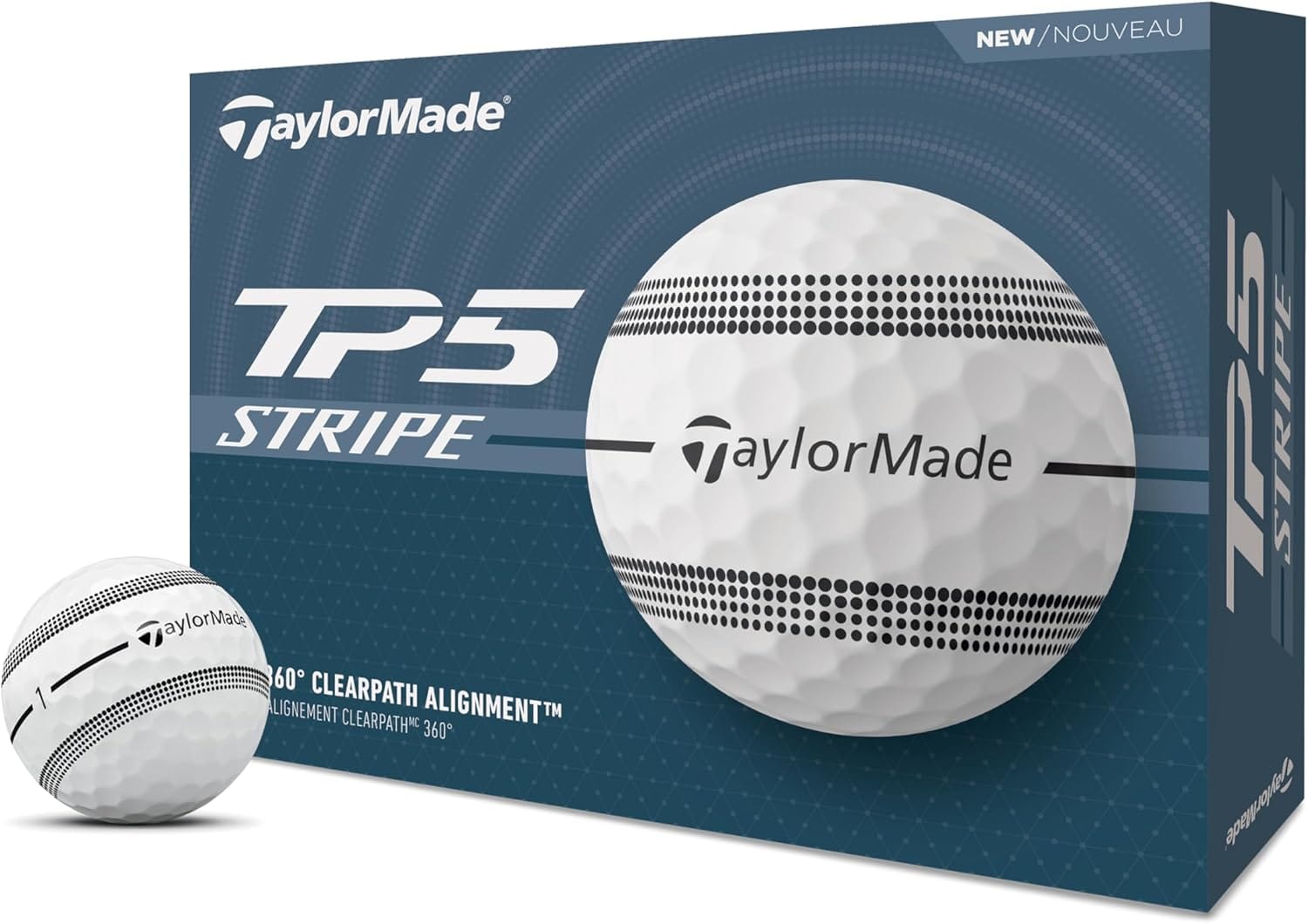
After my frustrating experience with Tour Response Stripes (more on that below), I switched to TP5 Stripes hoping the all-white design would solve my findability problems while keeping the alignment feature I'd grown to love. It was the best golf ball decision I've made.
The stripe isn't just for putting (though it's fantastic for that). The breakthrough came when I started using it on the tee.
I line up the stripe perpendicular to my target line, which gives me an instant visual reference for hitting the ball square. Remember, I'm a 21-handicap who still occasionally whiffs. Visual aids aren't beneath me – they're essential.
What I Love About the TP5 Stripe:
The alignment actually works. My putting improved immediately because I could see if the ball was rolling end-over-end. On drives, I stopped hitting as many glancing blows because I had a reference point for contact.
They fly noticeably farther than budget golf balls for high handicappers. My Arccos data shows about 8-10 yards more distance on drives compared to whatever random balls I was playing before. For a guy who needs all the help he can get, that matters.
Soft feel without being mushy. I'm not good enough to really dial in wedge spin, but these feel solid off the clubface. They don't have that rock-hard sensation of cheap distance balls.
Easy to spot. The all-white design with clean line graphics makes them relatively easy to find in light rough. More on this in a minute.
The Brutal Reality:
At about $4.50 per ball, every lost ball hurts. I calculated my actual cost per round, and it's sobering.
Playing TP5 Stripes, I'm spending roughly $18-25 per round just on golf balls I lose. But here's the thing: I'm losing fewer balls because I'm hitting them straighter.
I'm also enjoying the process more because the alignment features are actually helping my game.
Tour Response Stripe: The Pretty Ball That Plays Hide and Seek
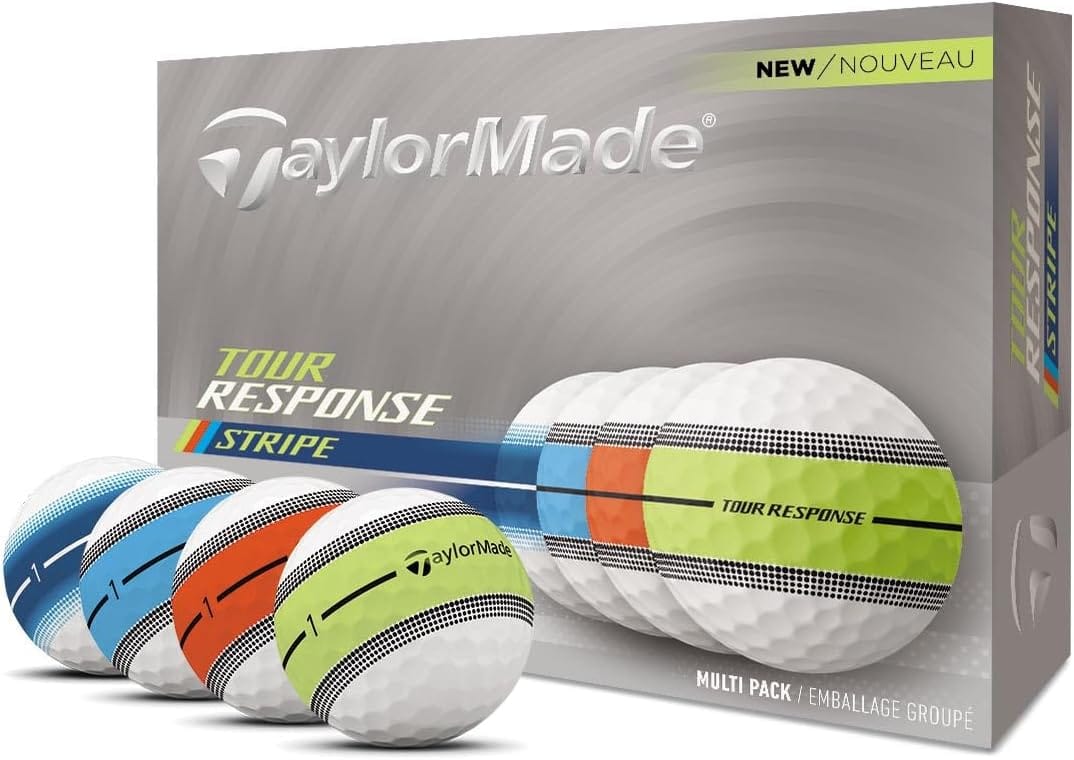
I started my stripe ball journey with the Tour Response Stripes, attracted by the lower price point and that same alignment stripe concept. At $3.25 per ball versus $4.50 for the TP5, the math seemed obvious.
And honestly? I fell in love with the alignment stripe immediately. Lining up putts became so much easier. Using it on the tee to hit the ball square was a game-changer. I was hooked on the stripe concept.
Then fall arrived at River Creek Club.
That pretty colored stripe – the blue and red designs that look so good in product photos – became golf ball camouflage in the real world. The colored stripes blend into shadows, fall leaves, and thick Virginia rough in ways I never anticipated.
I'd watch my ball land in the first cut, walk to the spot, and spend five minutes hunting for a ball that should have been a gimme find. The red stripe disappeared into autumn leaves. The blue stripe vanished into shadows. I was losing balls not because I hit them into trouble, but because I literally couldn't spot them sitting in light rough.
The Math Problem:
Tour Response Stripes cost about $3.25 per ball. But when you're losing 30% more of them because they're harder to find, the savings evaporate completely.
I ended up spending nearly the same per round while dealing with constant frustration. That's when I made the switch to TP5 Stripes – same alignment concept I'd grown to love, but all-white design that actually stands out against grass and leaves.
Pro V1: Separating Myth from Reality
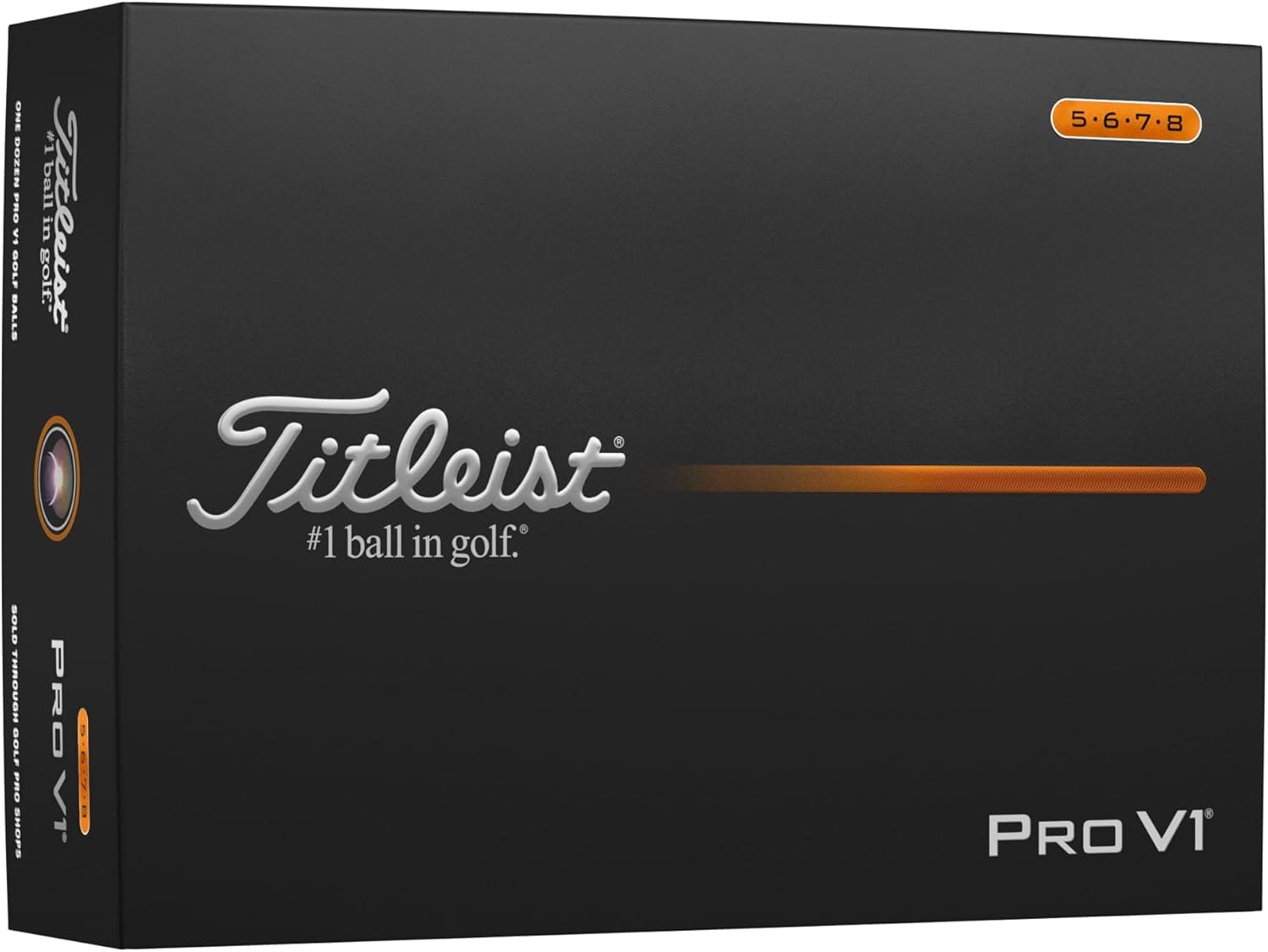
Every golfer has to reckon with the Pro V1 eventually. It's the gold standard, the ball every tour pro plays, the one your scratch golfer buddy swears by.
So I bought a dozen and played them for a month. Here's what I found:
They are really good balls. The feel is exceptional, they fly well, and they hold greens better than anything else I've played. When I actually hit a good shot, the difference is noticeable.
But...
For a 21-handicap, most of the Pro V1's advantages are theoretical. I'm not spinning wedges back on command or shaping shots around trees.
I'm trying not to four-putt and hoping to find my drive in the fairway. The Pro V1's lack of alignment aids actually made me putt worse.
After months with stripe balls, going back to a plain white ball felt like putting blindfolded.
The Psychological Factor:
Here's something nobody talks about: premium ball anxiety is real. Standing over a $5 Pro V1 on a tight driving hole at River Creek Club, I tensed up.
I played more conservatively, which isn't what my aggressive, go-for-everything game needs. With TP5 Stripes, I felt the same performance benefit but without the paralyzing fear of losing Tiger's golf ball.
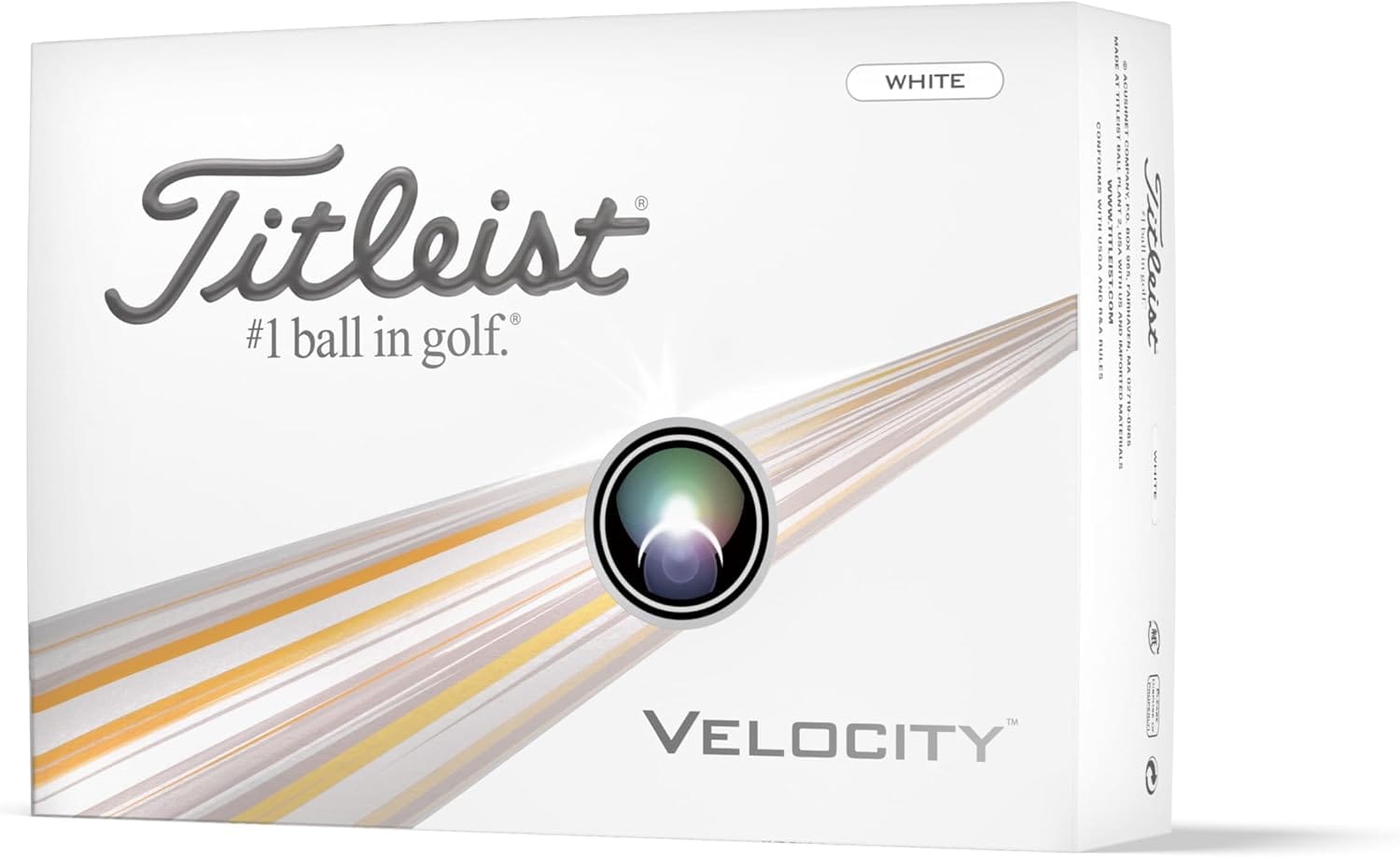
Budget Golf Balls for High Handicappers: Titleist Velocity
If you're currently playing whatever you find in the woods or buying the cheapest thing at Dick's, Titleist Velocity balls are your gateway drug to actually caring about golf ball performance.
At about $2.50 per ball, they're the sweet spot between "I don't care what happens to this" and "this might actually help my game."
What they do well: They fly far, feel decent off the clubface, and hold up better than true budget balls. They're also bright white and easy to spot.
What they don't do: No alignment aids, firmer feel around the greens, and they don't hold greens as well as premium balls. Though at my skill level, this rarely matters.
The Perfect Scenario for Velocity:
These are ideal for:
- Your first round at a new, difficult course where you expect to lose balls
- Playing with beginners who might accidentally hit your ball
- Windy days when everyone's losing balls
- When you're working on major swing changes and expect some wild shots
My Current Strategy
After playing hundreds of rounds and losing hundreds of balls, here's what I actually do:
70% of rounds: TP5 Stripe
The alignment features have genuinely improved my putting and driver contact. Yes, they're expensive, but I'm playing better golf and losing slightly fewer balls because of improved accuracy.
20% of rounds: Titleist Velocity
New courses, really windy days, or when I'm playing with hackers who might hit my ball. Sometimes being practical beats being optimal.
10% of rounds: Whatever I find
Let's be honest – sometimes you run out of balls and have to play that Pinnacle you found in the woods. Golf is humbling that way.
What About You?
If you're currently playing random balls or the cheapest option available, here's my honest recommendation:
Start with Titleist Velocity for a month. Track how many you lose and how they feel. If you're losing more than 6 balls per round, stick with these until you improve.
If you lose 3-5 balls per round and want to invest in your game, try TP5 Stripes. The alignment features are legitimately helpful for high handicappers, more so than any fancy spin characteristics.
Skip the Tour Response Stripes unless you play courses with minimal rough. They're good balls, but the findability issue is real.
Pro V1s are fine if someone gives them to you or you want to treat yourself occasionally. But don't feel like you need them to improve. You don't.
The Bottom Line
As a 21-handicap who's obsessed with improvement, I've learned that golf balls matter, but not in the way most reviews suggest. We don't need to optimize spin rates or trajectory windows.
We need balls that help us with the basics: hitting it square, lining up putts, and not going bankrupt in the process. The TP5 Stripe does all of that better than anything else I've tried.
Yes, it hurts when I lose one. But I'm losing fewer of them, putting better, and hitting more solid drives. For a high handicapper, that's worth the premium.
Your wallet and your scorecard will thank you.
What's Your Next Step?
Start by tracking how many balls you actually lose per round for your next five rounds. Be honest about it.
If you're losing 6+ balls per round, stick with Titleist Velocity until your accuracy improves. If you're losing 3-5 balls and want to invest in better putting and alignment, grab a sleeve of TP5 Stripes and try them for three rounds.
Trust me, the alignment stripe will change how you think about putting and tee shots.
– Jason
Links:
• TaylorMade TP5 Stripe on Amazon
• TaylorMade Tour Response Stripe on Amazon
• Titleist Pro V1 on Amazon
• Titleist Velocity on Amazon