This post contains affiliate links.
Let me start with a confession: I avoided golf tournaments for years because I I didn't have a handicap. Not because I didn't want one. Because I didn't know how to get one.
Picture this: I join River Creek Club other members start asking me if I'm playing in the next tournament.
"We need another guy for the scramble." "What's your handicap, Jason?" my playing partner asked.
"Uh... I don't really keep track. Maybe... 18?" I lied, knowing full well I'd really never broken 100 in my life.
That night, I went home and Googled "what is a golf handicap" like a complete amateur. Which, let's be honest, I was.
If you're reading this and nodding along, you're in the right place. This isn't going to be some technical deep-dive written by a scratch golfer who "remembers" being bad. This is a real golf handicap for beginners guide from someone who shoots in the 90s on a good day and has made every embarrassing handicap mistake in the book.
What Is a Golf Handicap for Beginners?
Here's the thing nobody tells you about handicaps: they're not a scarlet letter. They're actually your best friend.
A golf handicap is simply a number that represents your potential to play good golf. Not your average score. Not your worst day. Your potential.
Think of it like this: if you took your 8 best rounds out of your last 20, threw out the disasters, and calculated what you're capable of shooting when things go right – that's essentially your handicap.
The official definition is more complex (we'll get there), but that's the spirit. The system is designed to show what you can do when you're playing well, not punish you for that round where you lost six balls and shot 127.
More importantly, it's what lets you compete fairly against better players. If I play against a scratch golfer, I get 21 strokes. Suddenly, our match is competitive instead of me getting destroyed by 30 shots.
This is especially helpful if you're just starting out – a golf handicap for beginners levels the playing field and makes the game more enjoyable with friends who've been playing longer.
Golf Handicap Calculator Explained: The Math Behind It
Look, I know what you're thinking. "Jason, I barely passed high school algebra. Don't try to explain golf math to me."
Fair point. But here's how the golf handicap calculator explained in simple terms that actually makes sense:
Step 1: Your Handicap Index is calculated using your 8 best Score Differentials from your most recent 20 rounds.
Step 2: A Score Differential is basically how you played relative to the course difficulty, adjusted for conditions.
Step 3: The formula is: (Adjusted Gross Score - Course Rating) x 113 / Slope Rating
Don't panic about the formula. The important part is this: you only need 3 scores to get your first handicap. And the system automatically throws out your worst rounds when calculating.
Let me give you a real example from when I first got my handicap:
I submitted three rounds: 98, 105, and 102. I was convinced my handicap would be some embarrassing number in the high 20s. Turns out? It calculated to 22.1.
Why wasn't it higher? Because the system looked at course difficulty (River Creek plays tough), weather conditions, and focused on my potential rather than my disasters.

How to Get Your First Official Handicap
This is where I wish someone had just given me a step-by-step guide instead of making me figure it out through trial and error.
Option 1: Join a Golf Club (Recommended)
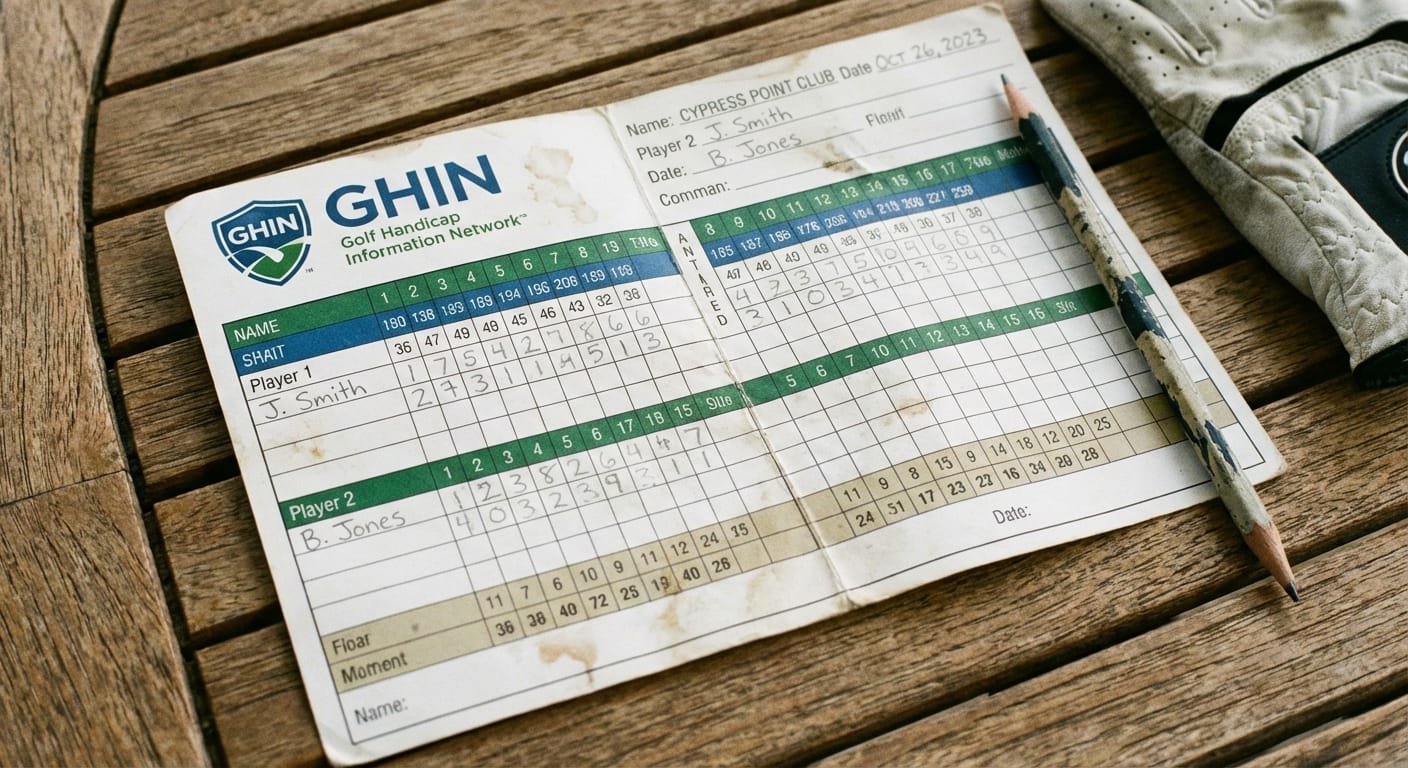
When I joined River Creek Club, getting a GHIN handicap was almost automatic. I just had to ask the pro-shop and a few minutes later, I had it. Most clubs include USGA membership in your dues, which gives you access to the official GHIN (Golf Handicap and Information Network) system.
Pros: Automatic updates, official tournaments, credibility
Cons: Requires club membership
Option 2: Join a Golf Association
You don't need to be a country club member. Most state golf associations offer GHIN membership for around $30-50 per year.
In Virginia, I could have joined the Virginia State Golf Association and gotten the same official handicap without joining a club.
Option 3: Golf App Handicaps
Apps like Golf GameBook, The Grint, or 18Birdies offer handicap tracking. These aren't "official" USGA handicaps, but they're calculated the same way and accepted at most casual tournaments.
Honestly? If you're just starting out and not playing in official events, an app handicap is fine.
Getting Started: What You Need
1. Play three rounds and keep honest scores
2. Make sure the courses are rated (almost all public courses are)
3. Post your scores within a few days of playing
4. Be honest – seriously, sandbagging hurts nobody but yourself
Reality Check: Average Golf Handicaps for Beginners in 2024
Here's what the golf industry doesn't want you to know: most golfers suck. And that's totally normal.
According to USGA data, the average golf handicap in 2024 for men is around 14.2. For women, it's 27.5. But those numbers are misleading because they only include golfers who actually maintain handicaps.
The reality? Most recreational golfers – the ones who play 10-20 rounds a year and don't keep official scores – would probably have handicaps in the 20s or higher.
Here's the average golf handicap 2024 breakdown that nobody talks about:
- 0-9 handicap: Less than 10% of golfers (these are the YouTube instructors)
- 10-18 handicap: About 25% of golfers (solid recreational players)
- 19-27 handicap: About 30% of golfers (where I live)
- 28+ handicap: The rest of us, and there's no shame in it
When I first got my 22.1 handicap, I thought I was terrible. Then I played in a member tournament and realized I was only mildly worse than the rest of players.
What Actually Moves Your Handicap Up and Down
This was the biggest surprise when I started tracking my handicap: it's way more stable than you think.
Remember, your handicap uses your 8 best differentials from your last 20 rounds. That means:
To lower your handicap: You need to consistently shoot better rounds that replace your current "best 8." One great round helps, but you need sustained improvement.
To raise your handicap: You'd need to consistently play worse golf for weeks. A few bad rounds won't hurt you much.
My handicap has moved from 22.1 to my current 20.9 over the past year. That represents dozens of rounds and hundreds of hours of practice. Handicaps don't jump around – they reflect genuine changes in your game.
Here's what I've learned actually moves the needle:
Things that lowered my handicap:
- GOLFTEC lessons (fixed my slice)
- Better putting (biggest impact per stroke)
- Course management (playing smarter, not harder)
- Consistent practice routine
Things that barely moved it:
- New clubs (sorry, equipment companies)
- YouTube tips
- Playing more often without practice
- One great round followed by usual scores
How Much Does One Terrible Round Actually Hurt?
This is the question that kept me up at night before I understood the system.
Last spring, I had one of those rounds. You know the type. Lost two balls on River Creek's par-5 9th alone. Picked up on two holes after hitting double par. Shot 111 and wanted to throw my Ping G440s in the lake.
I was convinced my handicap would skyrocket back into the mid-20s.
The next morning, I checked my GHIN app with one eye closed, bracing for devastation.
My handicap went from 21.8 to 21.9.
That's it. One-tenth of a stroke for the worst round I'd played all year.
Here's why: that 111 created a Score Differential so high it didn't even factor into my handicap calculation. The system used 8 better rounds from my recent history and essentially ignored the disaster.
The handicap system has built-in protection against blow-up rounds:
- Equitable Stroke Control (ESC): Caps your hole scores based on handicap (I can't post higher than 8 on any hole)
- Best 8 of 20 calculation: Bad rounds usually don't factor in
- Playing Conditions Calculation: Adjusts for unusually difficult conditions
The system is actually designed to protect higher handicap players more than low handicap players. A scratch golfer's handicap moves faster because their range is smaller. My handicap is more stable because the system expects occasional disasters.
Translation: stop worrying about that one terrible round. The math has your back.
Why a High Handicap Actually Opens Doors
Here's the plot twist: once I got comfortable with my 21 handicap, golf became way more fun.
Tournaments that seemed off-limits suddenly became competitive. That club tournament I avoided? I played in it this year and we finished in the middle of the pack thanks to the handicap system.
I even started playing with the retired guys on their Sunday morning rounds where everyone buys in for $15 and the winner basically gets bar money for the week. When everyone's getting their strokes, the playing field levels out.
Most importantly, I stopped making excuses and started tracking real improvement. You can't manage what you don't measure, and my handicap gives me an honest benchmark for progress.
The golfers I respect most aren't the scratch players – they're the 25 handicaps who show up every week, keep honest scores, and gradually improve. Those are my people.
Common Golf Handicap Questions for Beginners
Q: How often does my handicap update?
A: Every time you post a score. The GHIN system recalculates daily, so you'll see changes within 24 hours of posting.
Q: Do I have to post every round?
A: Yes, if you want an accurate handicap. Post every round played under the Rules of Golf, regardless of how bad it was.
Q: What's the maximum handicap?
A: 54.0 for both men and women. Don't worry – it takes some serious effort to get there.
Q: Can I use my handicap at any course?
A: Your Handicap Index converts to a Course Handicap based on the specific course and tees you're playing. Most courses have conversion charts posted.
Q: What if I only play 9 holes?
A: You can post 9-hole scores. The system combines two 9-hole scores or extrapolates one 9-hole score to 18 holes for handicap purposes.
Getting Started: Your Action Plan
If you've made it this far, you're ready to stop being intimidated and start tracking your real game.
Look, I'm not going to promise that getting a handicap will magically improve your golf. I'm a 20.9 handicap writing a blog about being bad at golf – clearly the number itself isn't everything.
But I will tell you this: getting an official handicap was the first step toward taking my golf seriously. It gave me an honest baseline, a way to track progress, and the confidence to play in events I'd been avoiding.
Your handicap isn't a judgement. It's not an embarrassment. It's just math. And once you understand the math, you can focus on the fun part: actually playing golf.
Stop avoiding tournaments. Stop lying about your scores. Stop being embarrassed about a number that just represents where you are in your golf journey.
Get your handicap. Own your number. Join the club of golfers who are honest about their games and working to improve.
Let's do this together.
– Jason
Ready to track your handicap? Download The Grint for free handicap tracking, or find your state golf association for official GHIN membership. Track your improvement with Arccos Smart Sensors like I do – the data helps explain why your handicap moves the way it does.