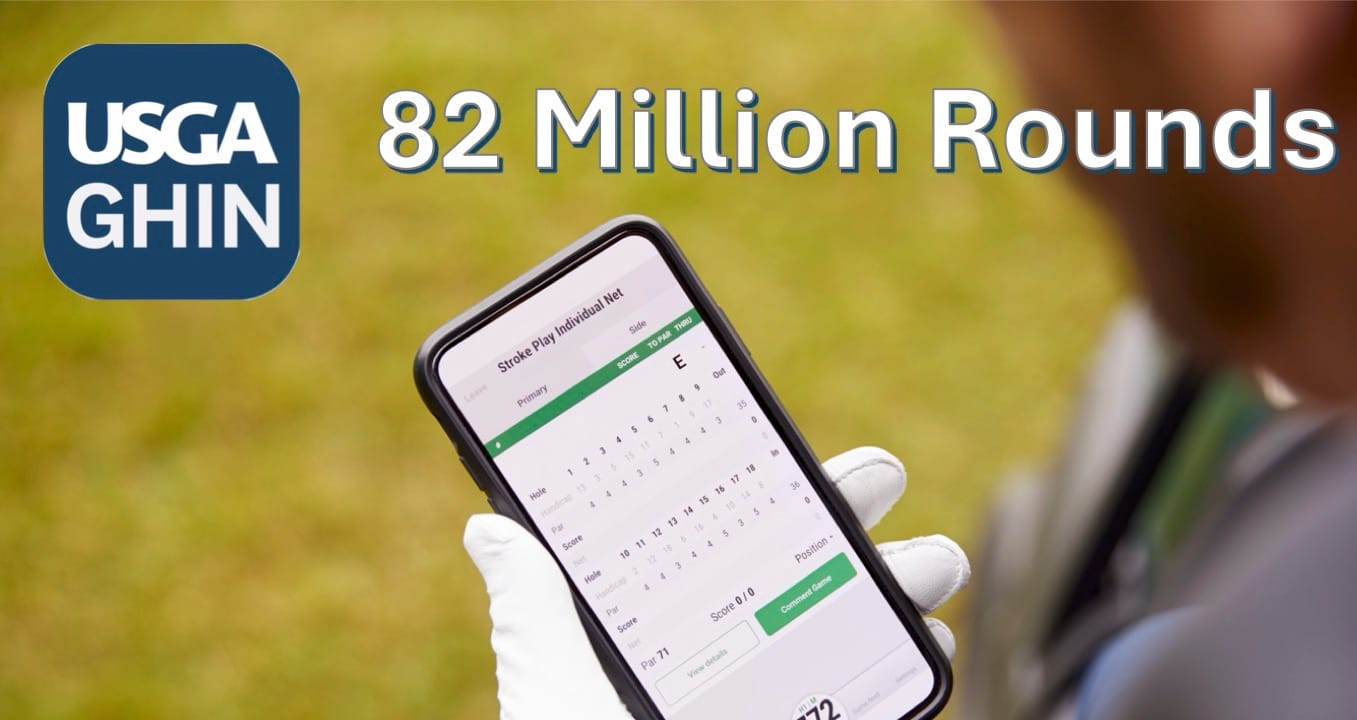
The USGA's 2025 report shows 82 million rounds posted and the average handicap is 14. That means most of us are high handicappers—you're not alone. The data also shows improvement is possible with the right tools.
Related: Rapsodo MLM1 review | GOLFTEC experience
Let me start with a confession: I check the USGA handicap statistics every year.
I'm looking for validation. I want the numbers to tell me that my 21 handicap isn't embarrassing. That I'm not alone out here chunking 7-irons into ponds and three-putting from 15 feet. That somewhere in America, there are millions of golfers just as mediocre as me.
This year, the USGA delivered.
The Numbers Are In (And They're Fascinating)
The USGA just released their 2025 Golf Scorecard, and here's the headline: 82 million rounds were posted under the World Handicap System last year. That's a domestic record.
Eighty-two million times, someone like you and me finished a round, pulled out their phone, and posted a score. Some of those scores were good. Most of them—including mine—were not.
Here's what else the report tells us:
3.68 million golfers now maintain an official handicap. That's an 8.2% increase from 2024. And a 46% jump since 2020.
If you picked up golf during COVID—welcome to the club. Literally. About 1.16 million of us joined the handicap system in the last five years. We're the reason the starter is backed up and the range is out of balls on Saturday mornings.
The Average Handicap Might Surprise You
Here's the number I look for every year: the average male handicap is 14.0.
That means the "average" male golfer is shooting somewhere in the mid-80s on a good day. Not breaking par. Not flirting with 79. Shooting 86 and being happy about it. And that's if they are are logging their true scores. How many golfers are taking a breakfast ball and not counting it. I'm confident it's more than we think.
For women, the average is 28.8—which, honestly, is closer to what I typically shot from the gold tees. The learning curve is real, and anyone who sticks with it deserves respect.
But here's what gets me: the average hasn't moved much. In 2020, the male average was 14.2. Five years later, it's 14.0. All those YouTube videos, all those training aids, all that "revolutionary" equipment—and we've collectively improved by 0.2 strokes.
We're Not All Trying to Go Pro (And That's Fine)
The report confirmed something I've suspected for a while: most golfers aren't grinding to get better. They're just playing.
Only 2% of male golfers have a scratch handicap or better. Two percent. That means 98% of us are out here shooting over par, losing balls, and pretending we meant to play that fade.
So the next time you feel bad about your game, remember this: statistically, you're not supposed to be good at golf. Almost nobody is. The guys you see posting swing videos on Instagram are the exception, not the rule.
The Nine-Hole Revolution Is Real
Here's the trend that actually affects how I play: half of all women's posted scores came from nine-hole rounds.
For men, it's about a quarter. But the direction is clear—shorter rounds are becoming normalized.
I get it. Who has four and a half hours on a Sunday? Between work, kids, and the basic maintenance of being a functioning adult, a full 18 feels like a luxury. Nine holes at twilight? That I can do.
My Arccos data doesn't care if I played 9 or 18—it tracks strokes gained either way. And honestly? I play better when I'm not exhausted by hole 14.
If you've been hesitant to post 9-hole scores because it feels like "not really playing," get over it. The USGA literally built the World Handicap System to accommodate this. Use it.
The States Where Golfers Are Actually Good
The report breaks down handicaps by state, and the results are... humbling.
Arkansas has the lowest average men's handicap at 10.6. Mississippi leads for women at 22.0.
I live in Virginia. We are not on either of those lists.
Florida posted the most total rounds, which makes sense—they can play year-round while the rest of us are staring at frozen fairways in January. Maine led the Northeast in scoring frequency, probably because when you only have five months of golf weather, you make them count.
What This Means for High Handicappers Like Us
Here's my takeaway from 82 million rounds of data:
1. You're not as bad as you think. The average golfer is a 14 handicap. If you're a 20, you're only six strokes worse than average. That's not a canyon—that's a gap you can close with some focused practice and maybe a few lessons.
2. Improvement is slow for everyone. The national average barely moved in five years. If your handicap dropped by even one stroke last year, you're beating the curve. Don't let Instagram golfers make you feel like you should be progressing faster.
3. Nine holes counts. Post those 9-hole scores. Play more often, even if it's shorter. Frequency beats marathon sessions when it comes to improvement.
4. Most people aren't tracking their game. Only 3.68 million golfers have a handicap. The National Golf Foundation estimates there are 26+ million golfers in the U.S. That means the vast majority aren't posting scores at all. If you're reading this blog, you're already more serious about improvement than most.
My 2026 Goal (Informed by the Data)
Looking at these numbers, I've recalibrated my expectations.
I'm not going to be a scratch golfer. I'm not even going to be a 10. But getting from 21 to 18 this year? That's realistic. That's three strokes. That's eliminating one blow-up hole per round.
My Arccos data says my biggest leak is approach shots from 150-175 yards. I'm losing almost a full stroke per round there compared to my handicap peers. Fix that, and 18 is possible.
The 82 million rounds gave me perspective. I'm not competing against the 2%. I'm competing against myself—and against the 14-handicap "average" golfer who, statistically, is only a few years of work ahead of me.
That feels achievable.
The Bottom Line
Golf is hard. The data proves it. But it also proves that millions of us are out here trying anyway—posting scores, tracking progress, and slowly getting better (or at least not getting worse).
If you're a high handicapper wondering whether you belong in this game, the answer is yes. You're in the majority. You're exactly where most golfers are.
Now let's go post some more rounds.
– Jason
Track your own strokes gained data with Arccos Smart Sensors – it's how I figured out where I'm actually losing shots.